Ōhara’s Moss Gardens
A farming valley an hour north where moss grows on everything, including the Buddhas — Kyoto before the crowds found it.
The short version
- Kyoto buses run direct to Ōhara in about an hour from the city — a farming valley under Mount Hiei that monastic retirees and imperial widows have favored for a thousand years, now favored by travelers who want Kyoto’s gardens without Kyoto’s elbows; planning at kyoto.travel.
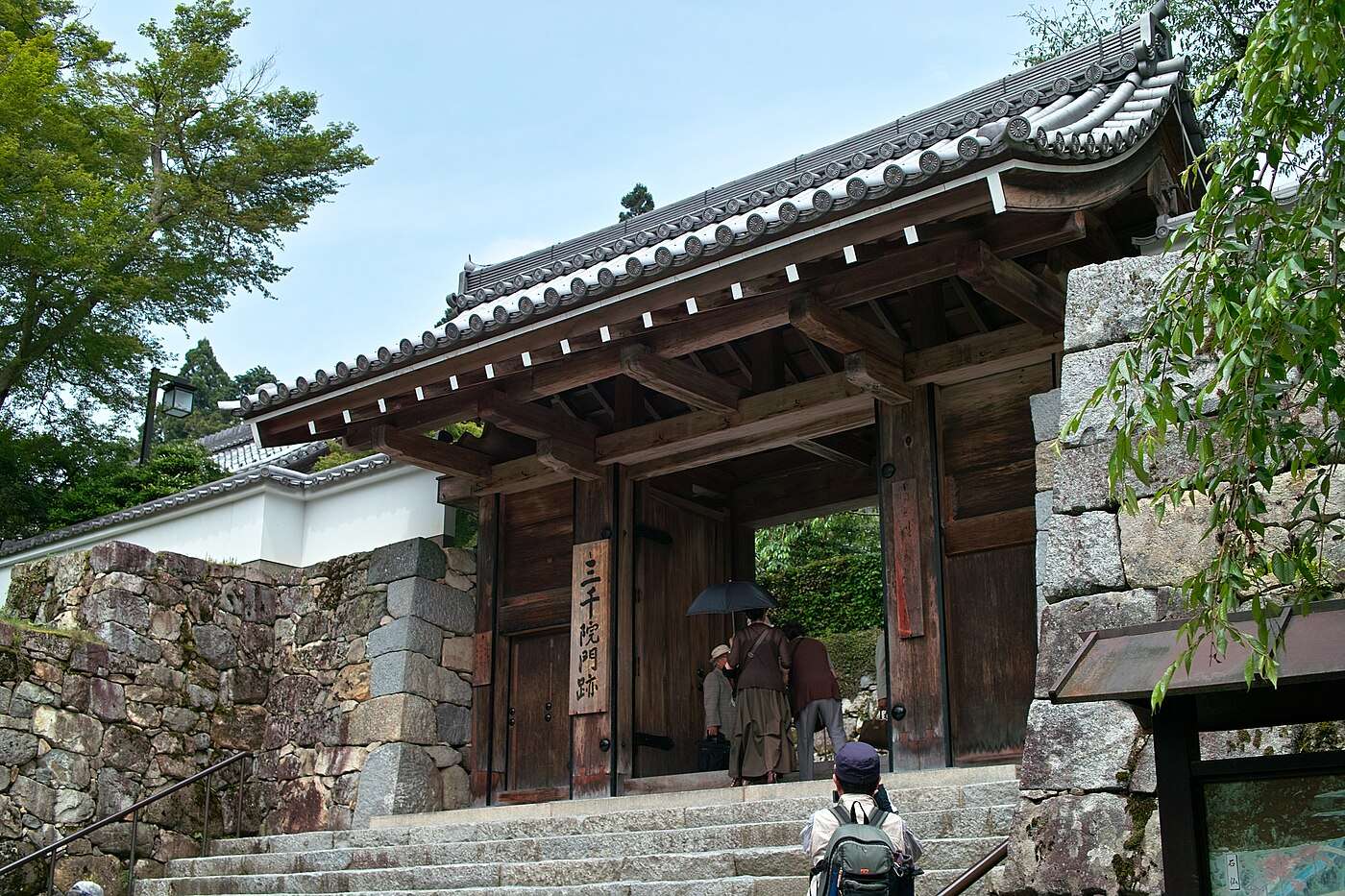
- Sanzen-in is the valley’s great temple: descending garden rooms of moss and maple, the Amida hall sitting in its cedar grove since 985, and the small stone jizō statues half-swallowed by moss that have become the valley’s gentlest celebrities.
- Hōsen-in, two lanes over, charges admission with matcha included and seats you before a 700-year-old pine framed like a painting — its ceilings are battlefield floorboards from Fushimi Castle, installed as memorial, which the temple explains soberly and you will not forget.
- Jakkō-in across the valley is where Kenreimon-in, sole survivor of her clan’s drowning at Dan-no-ura, lived out the Tale of the Heike’s last chapter as a nun — a small, rebuilt temple that carries more story per square metre than anywhere in Kyoto.
- The valley itself is half the visit: lanes between vegetable fields, shiso growing for the shibazuke pickle barrels, roadside stands on the honor system, and the Otonashi waterfall path when the lanes run out.

Getting there
Kyoto bus routes 17 and 19 run direct to Ōhara — about an hour from Kyoto Station or 40 minutes from Demachiyanagi, ending at the valley bus stop below the temple lane. Day passes covering the ride exist; so do taxis for groups in a hurry, though hurry defeats the product. The walk up to Sanzen-in climbs a lane of pickle shops and tea stands; Jakkō-in sits a flat 20 minutes across the valley floor.
The day
Arrive as Sanzen-in opens and take its garden rooms slowly — the moss does the talking, the jizō statues hide in plain sight, and the Amida triad has been receiving visitors for a millennium. Browse the pickle lane down, then Hōsen-in for matcha before the framed pine and the floorboard ceilings’ quiet history. Lunch on the lane — soba, yuba, or whatever the farmhouse kitchens are steaming. Cross the valley to Jakkō-in with the Heike story in your pocket; the walk between fields is the palate cleanser Kyoto proper cannot sell. Close at the Otonashi falls or a last pickle purchase, and ride the bus back forgiven of the city.
When to go
June for moss season, when rain polishes the whole valley to glow — and November for maple fire, when Ōhara does Kyoto’s autumn at half the density. Winter brings occasional snow on the thatch and near-private temples; summer mornings beat the heat up the valley. Whatever the month, weekdays keep the lanes to the farmers.
Frequently Asked Questions
How do you get to Ōhara from Kyoto?
Kyoto bus 17 or 19 — direct, about an hour from Kyoto Station, less from Demachiyanagi. The stop sits below the temple lane; everything in the valley is walkable from it.
Is Ōhara worth it with limited Kyoto time?
If this is your second Kyoto visit, or your first has hit crowd fatigue, yes without hesitation — it trades one headline temple for a whole quiet valley. First-timers racing a two-day list should probably keep it for next time.
What is special about Sanzen-in?
Descending moss gardens under cedars, a 10th-century Amida hall, and the famous half-buried jizō statues — a temple you walk down through rather than look at. Allow ninety unhurried minutes.
What is the story at Jakkō-in?
Kenreimon-in, the Heike empress who survived Dan-no-ura, spent her remaining decades here as a nun — the Tale of the Heike ends in this garden. The buildings were rebuilt after a 2000 fire; the weight of the place was not lost.
Can you combine Ōhara with Kurama or Kibune?
Geography says yes — they share the northern mountains — but each wants most of a day; stacking them produces bus math instead of calm. Pick one valley per visit.