Nara and the Deer
Japan’s first permanent capital keeps its treasures in one park patrolled by twelve hundred deer who bow for crackers. Kyoto is 35 minutes away and half a day does it justice.
The short version
- Kintetsu limited expresses and ordinaries run Kyoto to Kintetsu-Nara in about 35–45 minutes; the JR alternative takes a little longer and lands farther from the park; Kintetsu details at kintetsu.co.jp.
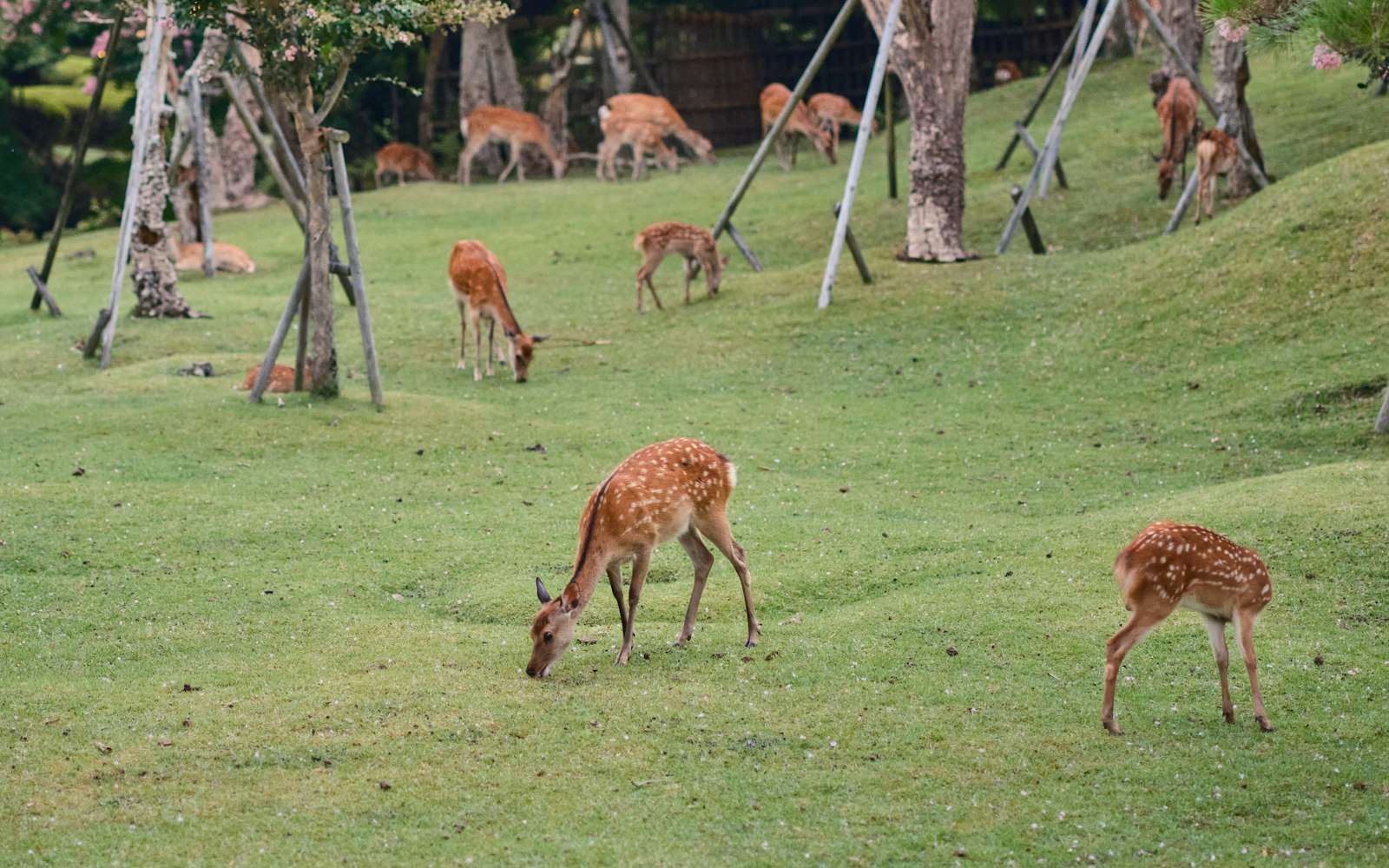
- Some 1,200 sika deer roam Nara Park as protected messengers of the gods — a status they’ve held for centuries and exploit fully. The shika-senbei cracker sellers dot every path.
- Tōdai-ji’s Daibutsuden houses the Great Buddha — 15 meters of bronze cast in the 750s inside one of the largest wooden buildings on earth; entry details at todaiji.or.jp.
- The pillar with the hole the size of the Buddha’s nostril stands inside the hall; children slither through for luck while adults reconsider their dimensions.
- Kasuga Taisha, up its lantern-lined forest path, hangs three thousand bronze and stone lanterns — lit en masse only at the February and mid-August festivals.
- Naramachi’s machiya lanes south of the park handle lunch and craft shopping in the old merchant quarter — the town half of the visit most day-trippers skip and shouldn’t.

Getting there
The Kintetsu line from its own Kyoto Station platforms is the right answer: direct trains half the hour, and Kintetsu-Nara station delivers you five minutes from the park’s edge, where JR Nara adds a fifteen-minute walk. IC cards cover the ordinary trains; the limited express adds a reserved seat for a small premium. No planning survives contact with this trip because none is needed — it is among the easiest great day trips in Japan.
The day
Walk up through the park as the deer begin their workday — the bowing is learned behavior, the pickpocketing of tote bags is too, and both are funnier with your own senbei ration in hand. Tōdai-ji first while the hall is quiet: the gate’s guardian statues, then the Buddha’s scale doing its slow arrival as you cross the courtyard. Continue up the stone paths to Nigatsu-dō’s free balcony — the best view in Nara and the least visited of the big three stops — then through the lantern forest to Kasuga Taisha. Descend to Naramachi for a machiya lunch and the merchant lanes. By mid-afternoon you’ve done the essential capital of eighth-century Japan and the train back leaves every few minutes.
When to go
Nara works every month: November paints the park’s maples, spring adds cherries and new-fawn season (give mothers room), August 14–15 lights all three thousand Kasuga lanterns for Obon in the year’s most atmospheric two evenings, and early February does the same in snow-chance weather. Midsummer days are hot and shadeless in the open park — morning visits win. The deer work year-round without complaint; autumn males carry attitude with their antlers, and the park signs mean it.
Frequently Asked Questions
Nara or a second Kyoto day?
If your Kyoto stay is three days or more, Nara justifies its half day without argument — the Buddha and the deer are singular, and the contrast rests your temple palate. On a two-day Kyoto sprint, it’s the first thing to cut and the first to restore.
Are the deer actually safe?
They’re wild animals with a tourism degree: fine when you follow the cracker protocol, pushy when you tease or hesitate, and occasionally bitey about paper. Small children do better watching than feeding.
Is the Great Buddha better than Kamakura’s?
Bigger, older, and indoors versus smaller, moodier, and under the sky — Japan’s two great bronzes split the vote honestly. Nara’s wins on scale and setting ceremony; see both and hold opinions.
What’s the Nigatsu-dō tip about?
The balcony hall above Tōdai-ji costs nothing, crowds lightly, and looks over the whole park to the city — the best ten free minutes in Nara. It’s a three-minute climb almost nobody makes.
Half day or full day?
The park’s big three plus lunch fit comfortably in five hours, which is the honest recommendation. Completists add Kōfuku-ji’s pagoda and the national museum’s Buddhist galleries and fill the day without padding.